 Image 1 of 4
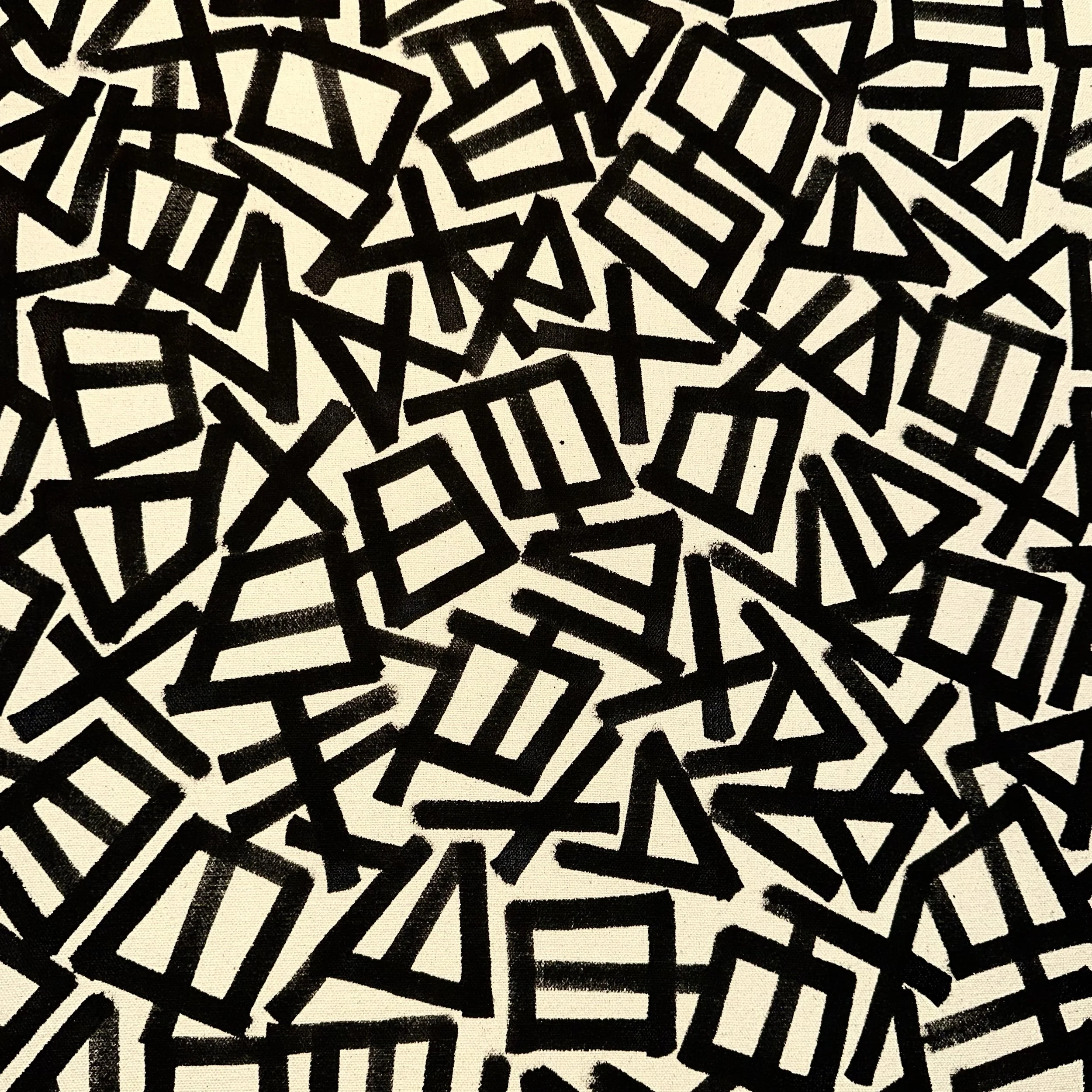 Image 2 of 4
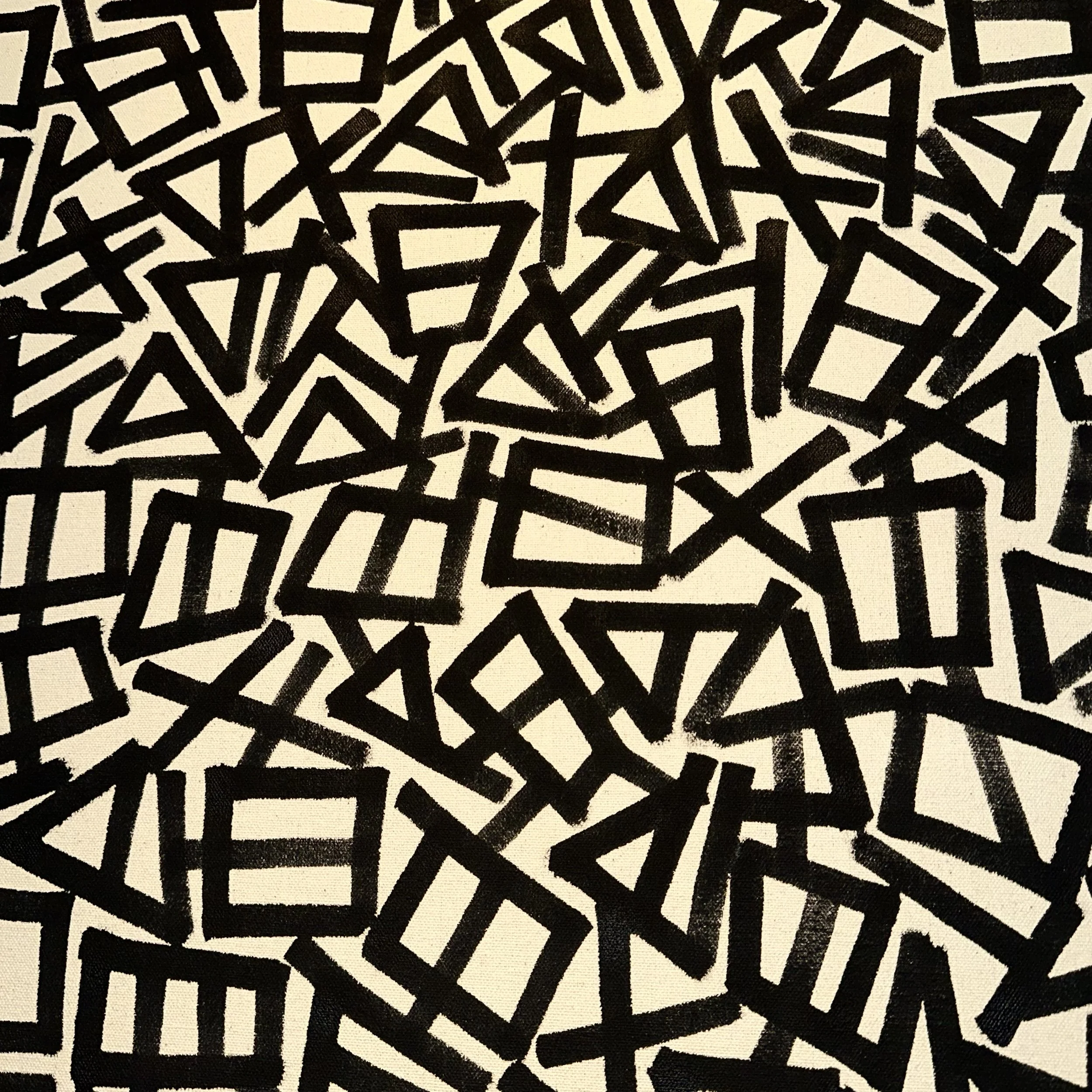 Image 3 of 4
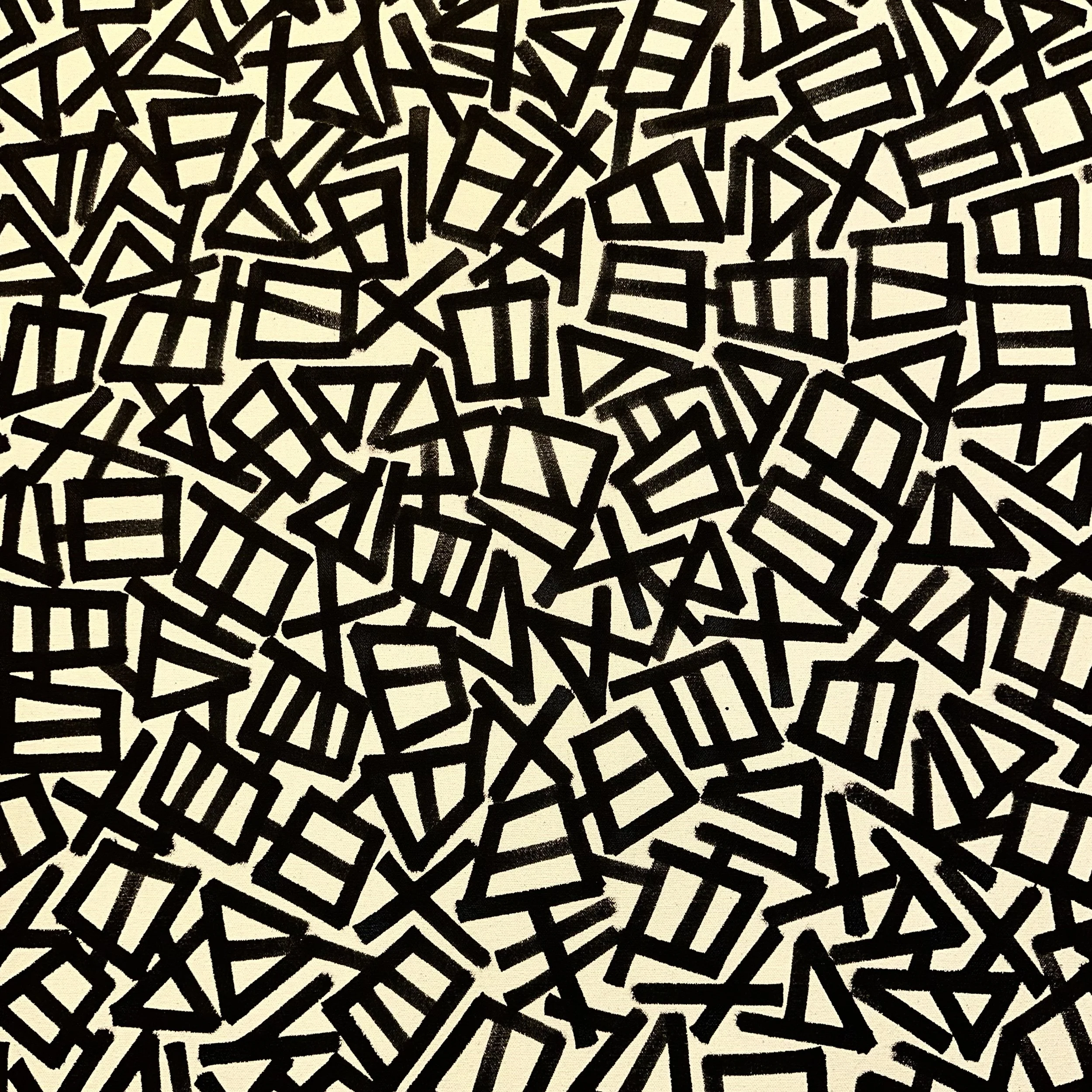 Image 4 of 4
30×30 Inches
Acrylic on Unprimed Canvas
2024
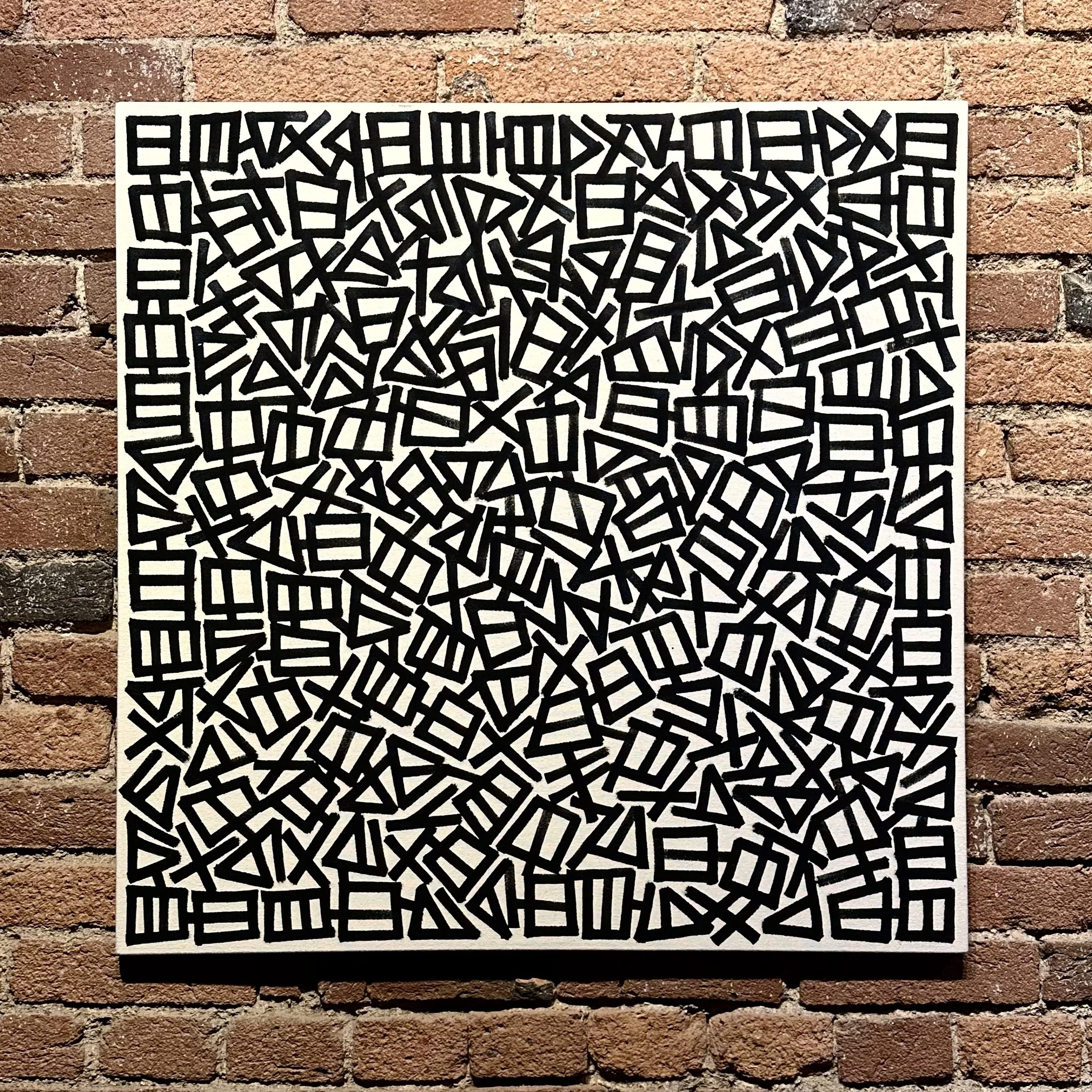
Pale Fire extends the glyph system into a denser and more dispersed field, where each mark holds its place through relation rather than emphasis. Executed in mars black on unprimed canvas, the work develops as a continuous surface: units applied by hand, layered in real time, and resolved through pressure, spacing, and internal balance. There is no fixed center and no image to decode. Structure emerges through accumulation, as local decisions compound into a coherent whole.
The exposed canvas is not background but active ground, setting the black marks into sharper tension and allowing the surface to breathe. What appears improvisational is governed by a closed logic, producing a composition that is immediate yet controlled. Like all Glyph Paintings, Pale Fire is a complete original—handmade, unrevised, and singular within an expanding body of work built from the same visual language.
30×30 Inches
Acrylic on Unprimed Canvas
2024
Pale Fire extends the glyph system into a denser and more dispersed field, where each mark holds its place through relation rather than emphasis. Executed in mars black on unprimed canvas, the work develops as a continuous surface: units applied by hand, layered in real time, and resolved through pressure, spacing, and internal balance. There is no fixed center and no image to decode. Structure emerges through accumulation, as local decisions compound into a coherent whole.
The exposed canvas is not background but active ground, setting the black marks into sharper tension and allowing the surface to breathe. What appears improvisational is governed by a closed logic, producing a composition that is immediate yet controlled. Like all Glyph Paintings, Pale Fire is a complete original—handmade, unrevised, and singular within an expanding body of work built from the same visual language.